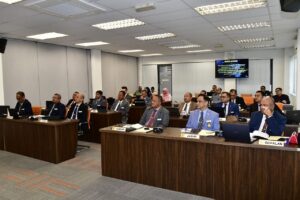
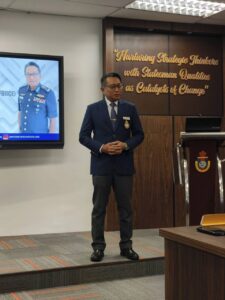
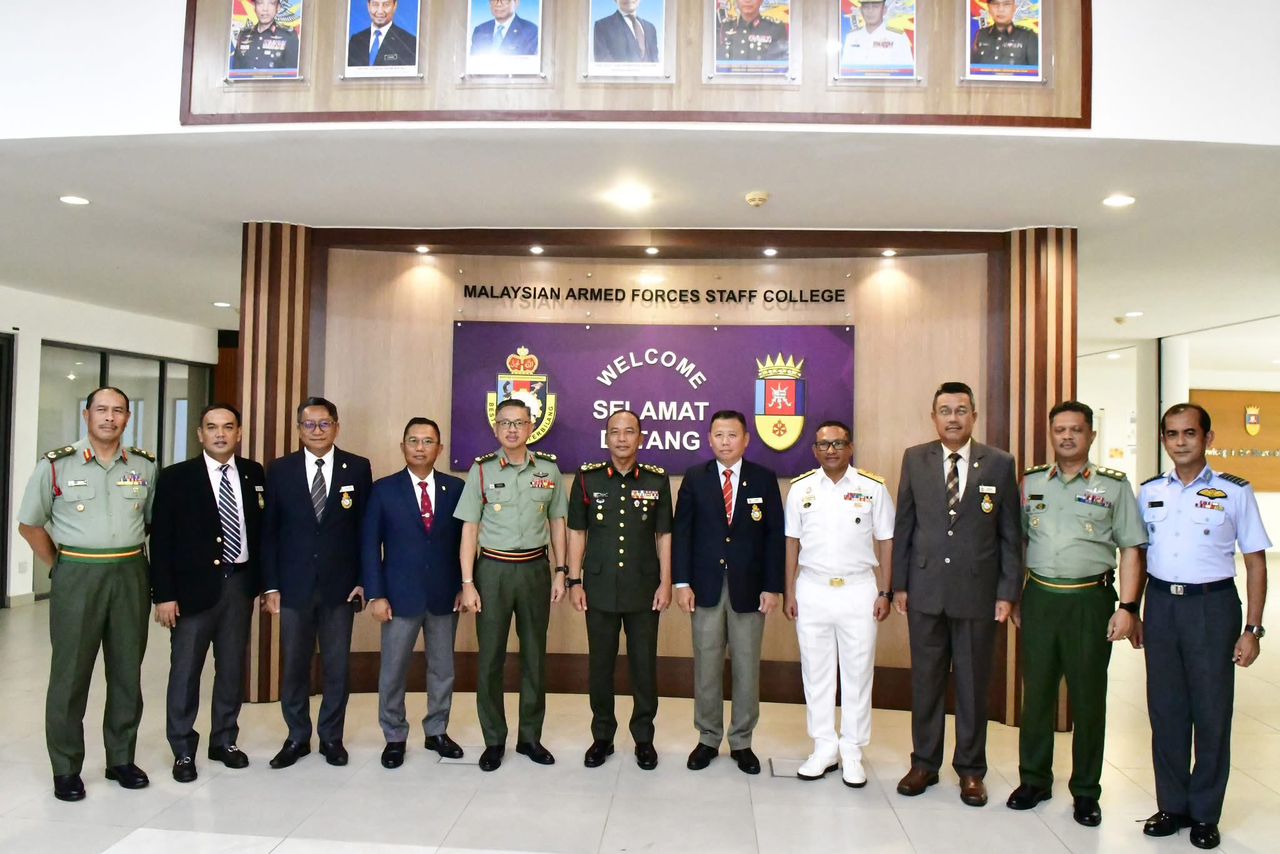
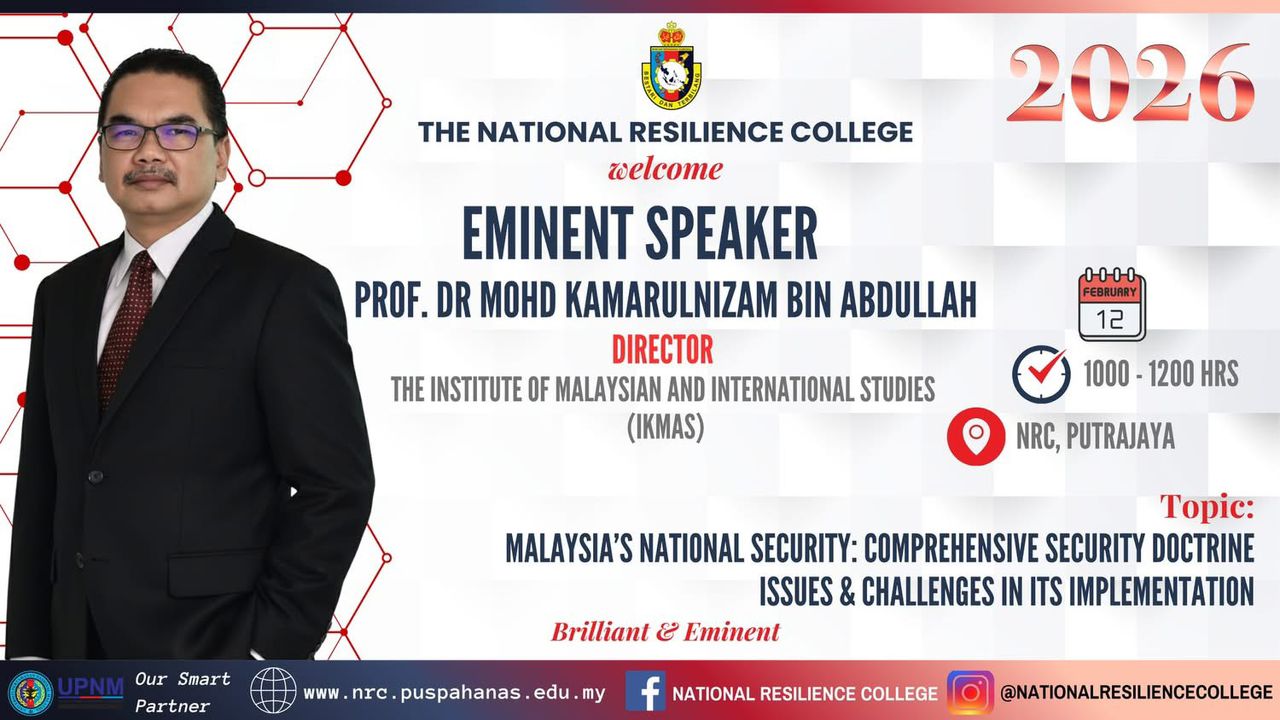
The National Resilience College convened a focused constitutional-briefing session in Putrajaya with Senior Directing Staff (Air Force), Brigadier General Dr Norazrin bin Shamsudin RMAF, centred on “The Malaysian Constitution and the Armed Forces.” The session positioned the Armed Forces not merely as a fighting instrument, but as a constitutional institution whose authority, legitimacy, and operational freedom ultimately depend on fidelity to the nation’s highest law. It reminded senior officers that strategic effectiveness begins with constitutional clarity, knowing who holds what authority, under what limits, and why restraint and legality are force multipliers in a democratic state governed by law.
Building from the constitutional foundations and rule-of-law principles typically emphasised in NRC constitutional briefings, the session traced the Constitution’s formation (including the constitutional-making process and Malaysia’s formation milestones) and then anchored the discussion on the rule of law: legality, limits on discretion, and an impartial system of justice.
A critical takeaway was that constitutional supremacy means all organs, including enforcement and military institutions, must operate within legal bounds, with decisions open to review where the law requires it; this is what protects the Armed Forces’ professionalism, shields the chain of command from politicisation, and preserves national confidence.
From there, the session connected doctrine and command culture to the Constitution’s explicit architecture for civil–military relations: executive authority is vested in the Yang di-Pertuan Agong but is exercisable subject to law and, in general, on advice, and the Yang di-Pertuan Agong is the Supreme Commander of the armed forces.
The briefing also highlighted the Armed Forces Council as a core governance mechanism, responsible (under the Agong’s general authority) for command, discipline, administration, and all other matters relating to the armed forces except operational use, a distinction that matters for accountability, lawful orders, and proper civil oversight.
Why must the Armed Forces master this? Because military power without constitutional legitimacy becomes strategically brittle: it invites legal contestation, erodes public trust, and creates friction with whole-of-government partners precisely when unity of effort is needed. The session reinforced that officers who understand the constitutional chain of authority can better navigate crises, emergencies, and politically sensitive environments, protecting both mission success and institutional credibility. And at the practical level, it links directly to service law: the Armed Forces Act 1972 establishes the services and places force structure and components under the Armed Forces Council (with approval of the Yang di-Pertuan Agong), underscoring that even force generation is law-governed, not personality-driven.