Institutional Integrity as a Pillar of National Resilience: Strengthening Governance
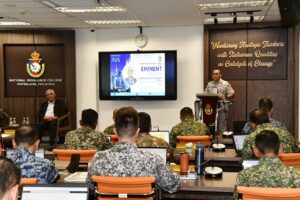
The National Resilience College was privileged to host Tan Sri Abu Kassim Mohamed, Chairman of the Perdana International Anti-Corruption Foundation, for an eminent session on “Institutional Integrity as a Pillar of National Resilience: Strengthening Governance and Public Trust in Malaysia.” The discussion examined how integrity is institutional, not merely personally grounded, through robust controls, transparent decision-making, accountable leadership, and credible enforcement, which together shape the state’s performance and legitimacy.
The session was especially engaging for the depth of intellectual exchange it generated. Course members actively discussed how governance reforms translate into everyday institutional behaviour, and how trust is built or lost through procurement systems, service delivery, regulatory consistency, and the perceived fairness of public institutions. The lively back-and-forth surfaced practical dilemmas and strategic choices, making the conversation both rigorous and highly relevant.
In Malaysia’s context, these conversations mattered because institutional integrity directly affects national resilience: it strengthens social cohesion, safeguards public resources, improves policy execution, and enhances Malaysia’s standing domestically and internationally. Ultimately, the talk reinforced a core strategic insight: when institutions are trusted, the state’s capacity to govern effectively increases, and resilience becomes a durable national advantage.