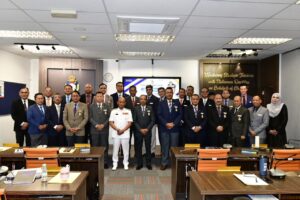
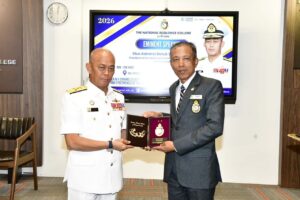
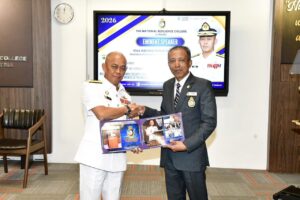
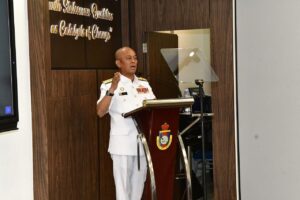
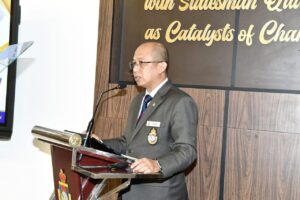
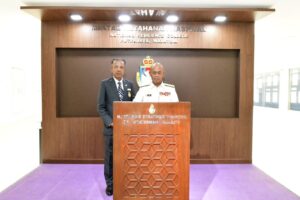
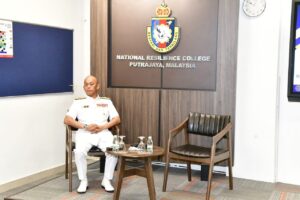
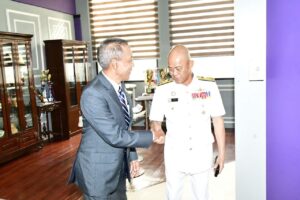
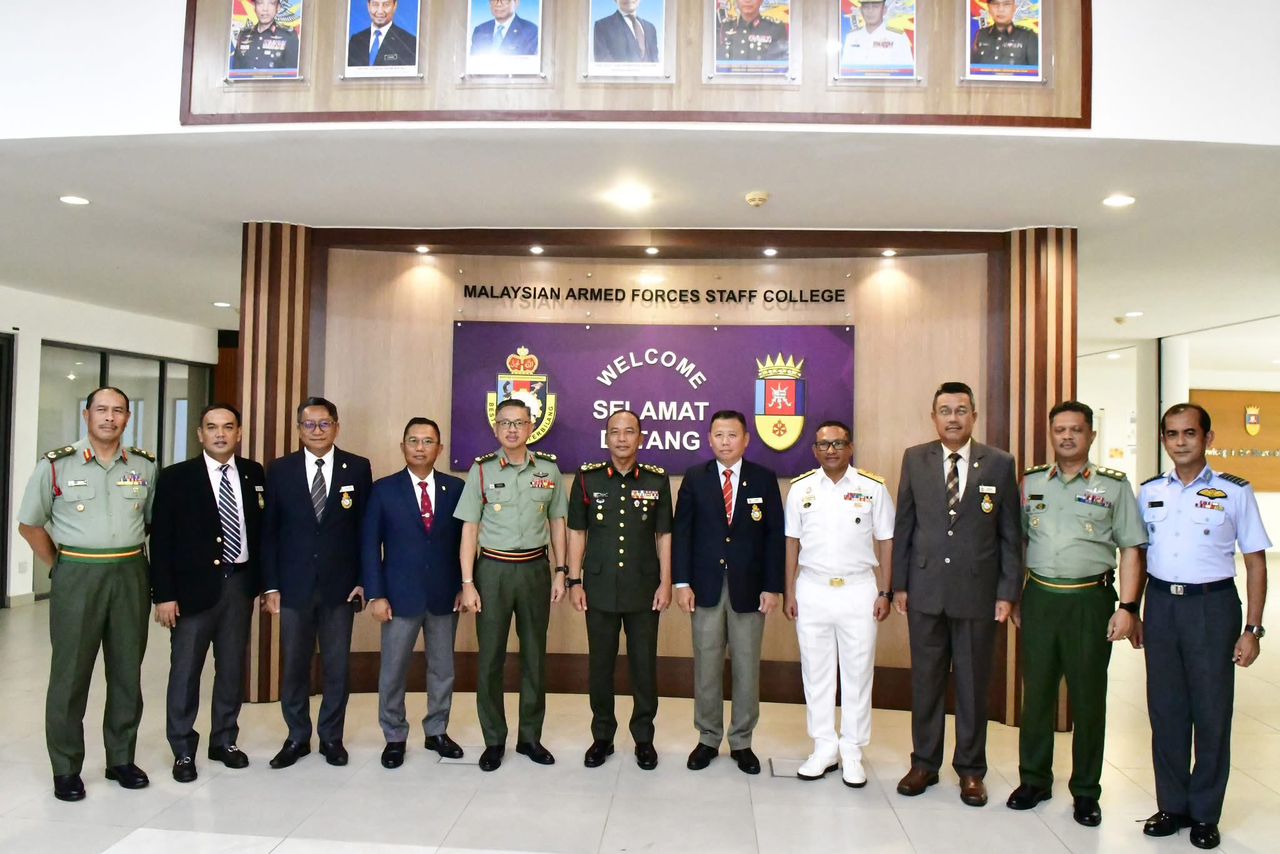
On 16 January 2026, the National Resilience College had our very own Vice Admiral Datuk Sabri bin Zali, President of the National Centre for Defence Studies (PUSPAHANAS), who delivered an executive talk titled “Military Power in a Dynamic Security Landscape: Refining the Role and Effectiveness of the Malaysian Armed Forces.”
Framing the session at the strategic level, he argued that Malaysia’s security environment had shifted structurally, where competition, coercion below the threshold of war, cyber pressure, and grey-zone activities demanded constant vigilance rather than episodic responses.
He emphasised that military power could no longer be judged by platforms or visibility alone, but by credibility, adaptability, and strategic judgement, especially when success often looked like “nothing happened” because stability was preserved and crises did not escalate.
Substantively, his lecture advanced a disciplined logic: this was not an argument for an expanded footprint, but for role refinement to avoid overstretch, protect warfighting excellence, and preserve legitimacy under civilian control.
He outlined how military power contributed to national resilience as a strategic instrument, deterring coercion, assuring the nation and partners, signalling intent, stabilising crises, and serving as a backstop when other systems were under strain, while stressing that resilience ultimately depended on integrated national power and whole-of-government and whole-of-society coordination.
He closed with a clear strategic message that captured the session’s tone: military power had to be “credible enough to deter, flexible enough to adapt, and wise enough to be employed with restraint,” anchoring effectiveness in disciplined leadership, threat-driven modernisation, and public trust.